Aussies aren't watching much Aus TV. But claim they want to watch more.

To the surprise of nobody living in Australia, a Screen Australia report has found that Australians don’t watch that much Australian TV.
The Screen Currency 2026 report had a few key takeaways that caught my interest.
Australians love local content far more than they watch it. 84% say access to local screen stories matters and 75% want to watch more, yet only 35% spend even a third of their viewing time on Australian content — and just 36% find it easy to discover local titles in the streaming environment.
This is probably the least-surprising takeaway. There’s always a huge gap between what people say they want and how they actually behave. There’s our idealised selves and the awful people they actually are (of course, not you, constant reader… the other people).
Part of the gulf, I think, is that when local programming resonates with an audience, it REALLY RESONATES. But a big problem with Australian content is that so much of it is purposefully made to be as big tent and bland as possible – Australia’s population size (and thus, potential audience size) makes betting on risky projects almost a surefire way to have a very short career.
Screen and games added $11.1 billion to the economy in 2023/24 — bigger than the electricity generation or sport and recreation industries — with the sectors together directly employing 68,844 people.
Local TV drama has richer shows but far fewer of them. Budgets have ballooned to compete globally (often matching and surpassing budgets for local films), yet first-release drama hours have roughly halved over 20 years — meaning fewer jobs and fewer viewing options. Streamers overtook all other investors in TV drama by 2025.
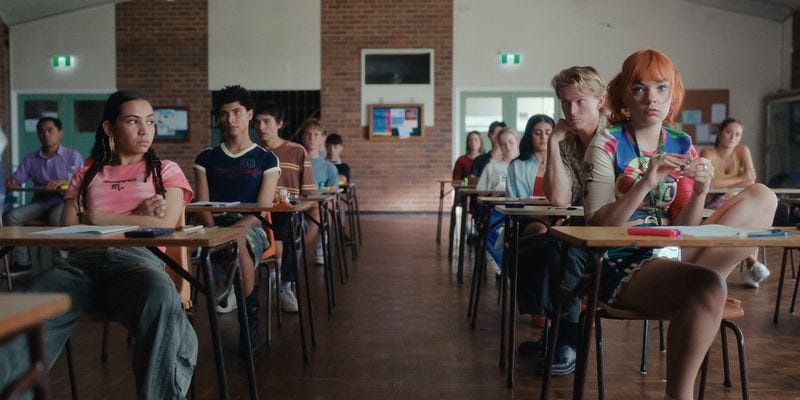
Children’s TV has nearly collapsed. Local kids’ TV hours fell 42% after commercial free-to-air sub-quotas were removed, leaving the ABC as almost the only commissioner — it reached 11.1 million viewers with first-run children’s content in 2025, versus roughly 350,000 each for Seven and SBS/NITV, and zero for Nine and Ten.
Bluey is a soft-power asset. It was the most-streamed show in the US in 2025 and the most-recognised Australian title internationally; broadly, 50% of audiences across eight priority markets say Australian content gives them a positive impression of Australia, and 50% say it increased their interest in visiting.
Country of origin barely registers for gamers. 60% of Australian players are unsure whether they’ve even played an Australian game. This is not how we talk about Aussie movies and TV shows.

There’s a lot more deep dive detail and data you can go through at the Screen Currency website.
I’ve written a lot about my frustrations with Australian television in the newsletter and won’t rehash it here beyond just highlighting my two biggest ongoing concerns:
Australia calls for local networks and international streamers to fund local production, but the definitions around what that means is too rubbery. Are we producing local series to tell local stories, or are we doing it to fund the local screen industry?
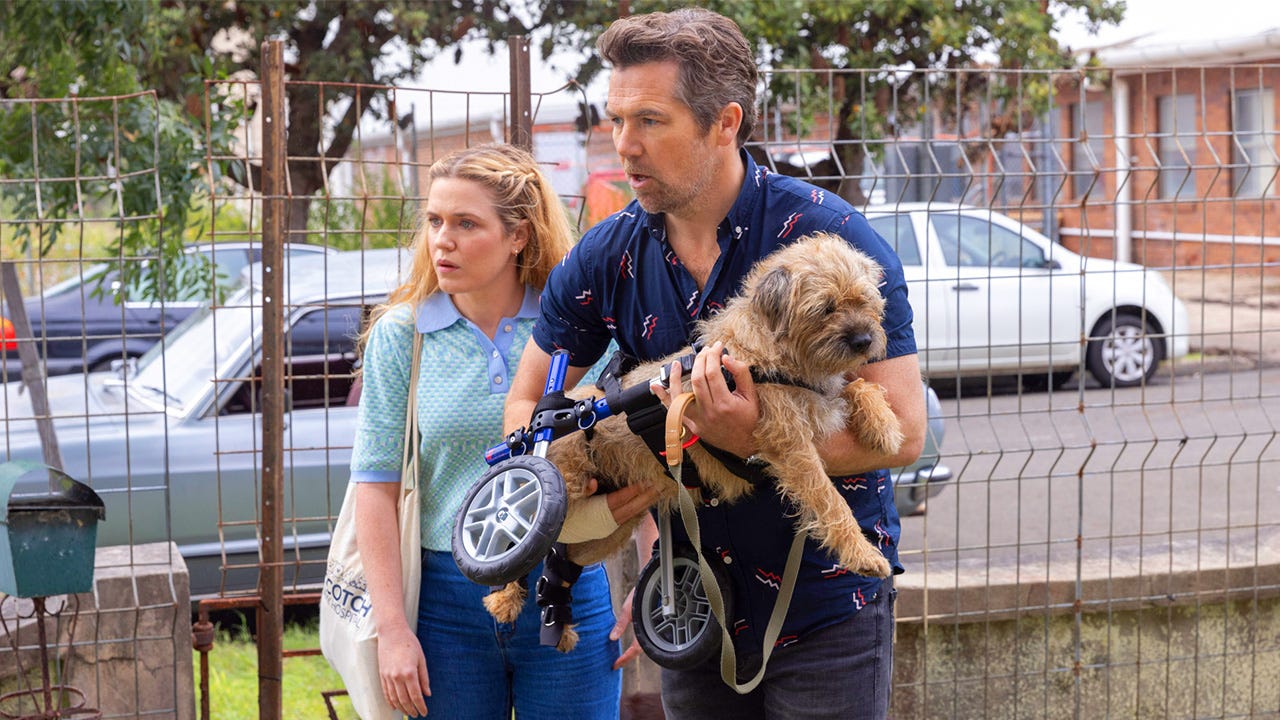
The result of this ill-definition is far too many Australian TV shows which have Americans or Brits as the lead characters, or are really cloudy in terms of location with a sense that they could just be set anywhere (the Melbourne-filmed All Her Fault is a good recent example of that… was it Melbourne? was it Chicago?). Meanwhile look at the success of, say, Colin From Accounts. That’s a series that has travelled well internationally that is quite clearly defined as being in Sydney’s inner west (although that train trip to Waterfall in season 2 was puzzling).We need to do a better job at establishing a sense of what an Australian production is when selling it to the world. It doesn’t need to be as hyper specifically defined as Scandi series are (woollen sweaters and a dead female body in the woods), but it would help if we can create a focused appetite for Australian shows. The bigger the global audience, the better our funding options.
When I consider Australian product, the thematics that appeal to me that I think define our shows and movies well is Australia’s earthy humanity and sense of humour. We need to do a better job at packaging that as an identity.
There was also the interesting comment about Bluey being used as a really successful vehicle for soft power.
Just over a year ago I wrote in the newsletter about the need for Australia to consider using content production for the purpose of soft power.
The only reason the US has any goodwill left from a global perspective is 100-ish years of soft power enforced through its screen production. We love America because of I Love Lucy, The Jetsons, The Golden Girls, Charlie’s Angels, The Sopranos, Sex & The City, Friends, Baywatch, The Simpsons, Seinfeld, Frasier, Cheers, and The Big Bang Theory.
If Trump in the last week has radically shifted the world order, outside of the US we need to consider that we are likely about to see a cultural vacuum too.
It’s time for Australia to stop thinking about Australian TV as just telling our stories for local audiences or as engines for the local screen industry and instead think about how Australian TV can play a role in whatever role the country wants to start playing on the global stage politically.
And…
We need to be ramping up investment in local productions that are telling our stories in an authentic way (with Australian creatives leading it in front of and behind the camera). But it goes beyond just making the shows. We need to think of our TV as a handshake with countries we do want to forge stronger ties with.
And
Over the last few years there has been a discussion in Australia about forcing local content quotas onto international streaming services. I’ve long argued that we actually really don’t want international companies telling our stories. They’re never really authentically Australian and often will have US actors either playing Australians or will rely on that tired idea of “American gets mixed up in unexpected Australian stuff (usually crime or strange culture in a small town)”.
You can read that article in full here:

But you also might be interested in my follow-up piece where I suggest that instead of having international streaming services fund our stories (which leads to international stars in our shows and location-less local stories), we instead think about going all in on the political value of our shows as soft power and fund them through our military.
My thinking was/is that maybe instead of wanting the US-owned Netflix to tell our stories, we should be thinking about how we can weaponize our content to our benefit - is it entirely a silly idea to think that Australian scripted TV shows could be financially supported by the budget of the Australian Defence Force (and managed by expanding the existing international soft power media effort ABC Australia)? Yeah, I know - wild idea, but we live in wild times.
And just to save you looking it up, the annual ADF budget is A$55.7 billion, with $527.4 million expected to be spent next year on the Australian Submarine Agency alone. Spending a few hundred million on the creation of Australian dramas and comedies that can be exported globally to build and protect Australia’s stature in a potential vacuum left by waning US cultural influence… that seems like a good deal to me.

News Desk
The US ABC has sued the FCC, alleging chairman Brendan Carr launched a “retaliatory campaign” of early license reviews to punish the network’s speech, in violation of the First Amendment. Read: The Hollywood Reporter
Bill Rasmussen, who founded ESPN in 1979 as the first 24-hour sports network has died at 93. Read: The Hollywood Reporter
Peacock is raising prices across all its plans for the fourth time in four years, with Premium climbing to $12.99 a month and Premium Plus to $19.99. Watching Murder She Wrote sure is getting expensive. Read: Deadline
Steven Zaillian and Richard Price are reuniting a decade after The Night Of for Ghettoside, a six-episode Netflix crime limited series based on Jill Leovy’s nonfiction book. Read: Deadline
Olivia Colman will guest star in the London-set sixth season of Only Murders in the Building. Read: thefutoncritic
Aoife Hinds and Billy Howle will lead The Ministry of Time, BBC and A24’s six-part adaptation of Kaliane Bradley’s time-travel novel, now filming in London. Read: Deadline
NBC News has handed Taboola exclusive control of all its programmatic display ad sales, extending a decade-long partnership as the ad-tech firm pushes deeper into the open web. Read: Axios
Brett Ratner says his Prime Video documentary Melania is being expanded into a docuseries. How long until the glowing documentary about Natalie Harp? Read: AV Club
Felicia Day has crowdfunded The Guild: Ren Faire’d, a reunion film of her cult web series, blowing past its goal in under four hours to raise more than $1.5 million from 8,600 backers. Read: IndieWire
Kane Parsons has posted “Everything Must Go,” his first new Backrooms YouTube short since the A24 film became a surprise $390 million hit. Read: ScreenCrush
Beth Behrs will guest on ABC’s Shifting Gears in season three as an ER doctor, reuniting with her 2 Broke Girls co-star Kat Dennings. Read: Deadline
The Sims 4 will release Mean Girls and Clueless capsule kits on 27 August, bringing Y2K and ‘90s movie fashion to Create-a-Sim at $3.99 each. Read: Variety
Australia’s ABC is consulting on a new First Nations content and strategy team after axing its 40-year-old Indigenous TV department, following the exit of Indigenous head Kelrick Martin. Read: IF
Trailer Park
Slow Horses returns for season 6 on Apple TV on Sept 16.
El Juicio debuts on Prime Video on Sept 11.
A powerful businessman’s son is accused of sexually abusing a schoolmate, igniting a fierce battle between two families — one father demanding justice, the other using his wealth to shield his son.
Best of the Best debuts on Netflix on Sept 18.
Two childhood best friends join UCLA’s competitive Bollywood-fusion dance team, only to find the road to the US championships is fiercer than they imagined.
Ludwig returns for season 2 on BritBox on Oct 13.
One Hundred Years of Solitude concludes with its grand finale on Netflix on Aug 26.
Turning Point: Generation 9/11 debuts on Netflix on Sept 2.
Twenty-five years on, the documentary explores how a single day reshaped a generation — from children who lost parents in the attacks to young Afghans and US Marines living with the fallout.
That’s the newsletter for the today.
Consider becoming a paid supporter of Always Be Watching.
Connect with Dan on Bluesky. Connect with Dan on Letterboxd. Connect with Dan on Linkedin. Challenge him on the NYT word game Crossplay. Email Dan @ alwaysbewatching.com or just reply to this email.